Extend Dynamics 365 Human Resources. Don't replace your Microsoft investment.
If your organisation already runs Microsoft Dynamics 365 Finance & Operations, introducing a separate HR platform can create another system, another integration layer and another place for employee data to be managed.
HRManagement365, powered by Hubdrive, extends Microsoft Dynamics 365 Human Resources in Finance & Operations with additional employee-lifecycle capabilities built on Microsoft Power Platform.
Keep the Microsoft HR capabilities that already meet your requirements. Add Hubdrive HR Power Extensions where you need more.
Show us your current HR process. We will identify what Microsoft Dynamics 365 Human Resources already provides, where Hubdrive can extend it, and what—if anything—needs to be integrated.
Defined product scope
Show which capability owns the employee workflow.
Approved hand-off
Label the information, direction, timing and trigger.
Operational use
Show where Finance & Operations uses the approved information.
Product-led extension
Defined HR product scope rather than isolated custom apps.
Controlled workflows
Clear triggers, approvals, records and connected actions.
Documented ownership
One agreed owner for each important process and data object.
Finance & Operations retains its agreed operational role.
Retain the Dynamics 365 Human Resources and F&O capabilities that already meet the requirement, extending them with Hubdrive where additional value is needed
Your HR problem may not require another HR system
Microsoft Dynamics 365 Human Resources already provides significant HR functionality within the Finance & Operations platform.
The problem usually appears when the organisation needs more than the standard process provides—a different employee experience, additional workflow, deeper automation, country-specific processes or broader lifecycle functionality.
At that point there are two very different choices:
Replace
Introduce another HR platform, duplicate capabilities and connect it back into Microsoft.
Extend
Keep the Microsoft HR foundation you already have and add Hubdrive HR Power Extensions only where additional capability creates value.
HRManagement365 is designed around the second approach.
01
A requirement goes beyond the current process
HR needs a workflow, employee experience or lifecycle capability that does not fit the current operating model.
02
A workaround appears
Email, spreadsheets, manual approvals or local applications fill the gap.
03
Employee information becomes fragmented
The same information may need to be entered, checked or reconciled across different processes.
04
Customisation grows
Individual fixes accumulate and become harder to support, upgrade and govern.
05
IT inherits the complexity
Ownership of data, workflows, integrations and support becomes increasingly difficult to see.
Decision Principle
Keep what works. Extend what doesn’t. Stay Microsoft.
Before adding another HR application, identify what Microsoft Dynamics 365
Human Resources already does well. Keep that capability, extend it with
Hubdrive where additional value is required, and customise only where
there is a genuine business requirement.
Close HR process gaps without creating another uncontrolled system landscape
The objective is not to copy every item of employee information into every application. It is to establish which product owns each part of the process and move approved information only where it is required.
Microsoft HR where it fits. Hubdrive where it adds value.
Microsoft Dynamics 365 Human Resources provides the foundation.
HRManagement365, powered by Hubdrive, adds HR Power Extensions where additional employee-lifecycle functionality is required.
The objective is not to duplicate Microsoft functionality.
It is to create the HR solution your organisation needs while retaining a deliberate Microsoft architecture.
The principle is simple:
- Use Microsoft capability where it meets the requirement.
- Extend it with Hubdrive where additional value is needed.
- Customise only where there is a genuine business requirement.
Before: fragmented HR hand-offs
Approvals are spread across email, spreadsheets and local applications. Teams re-enter information, reconcile differences and struggle to identify who owns a correction.
With HRManagement365: one governed employee journey
The employee journey follows defined roles and approvals across the appropriate Microsoft and Hubdrive capabilities, with agreed data ownership and controlled synchronisation where required.
Three ways Hubdrive extends your Microsoft HR investment
The product should change the operating process in a small number of distinctive, inspectable ways.
01. Extend before you replace
Keep the Dynamics 365 Human Resources capabilities that already meet your requirements and add Hubdrive HR Power Extensions where additional functionality creates clear value.
02. Turn HR gaps into governed product processes
Replace spreadsheets, email approvals and isolated applications with defined Microsoft and Hubdrive HR workflows. Use packaged capability before introducing bespoke development.
03. Build on the Microsoft platform you already have
Hubdrive HR Power Extensions are based on Microsoft Power Platform, enabling additional Power Apps, Power Automate, Power BI and Microsoft 365 scenarios alongside Dynamics 365 Human Resources.
Less unnecessary replacement. Clearer ownership. More value from your existing Microsoft investment.
Designed for organisations that need to extend Dynamics 365 Human Resources
HRManagement365 should be considered where your organisation already uses the Microsoft business platform and needs additional employee-lifecycle capability without unnecessarily replacing Dynamics 365 Human Resources functionality that already meets the requirement.
It may be a strong fit when you need to
A strong fit where spreadsheets, email approvals or local applications are limiting HR, or where additional self-service, lifecycle workflows, automation or clearer ownership across Microsoft and Hubdrive capabilities is required.
Further assessment is important when
Assess carefully where Dynamics 365 Human Resources / F&O already meets the requirement, another HR product owns the process, payroll is the primary requirement, or complex real-time, multinational or bespoke integration is expected.
What Microsoft already provides — and where Hubdrive can extend it
Microsoft Dynamics 365 Human Resources and Hubdrive may both participate in the employee lifecycle, but that does not mean they should duplicate the same processes or authoritative records.
| HR Process | Microsoft Dynamics 365 Human Resources / F&O | HRManagement365 powered by Hubdrive | Decision required |
|---|---|---|---|
| Recruitment | Microsoft provides native recruiting capabilities, including recruiting requests and the Dynamics 365 Human Resources HR Recruiting app. | Extend or complement recruitment with Hubdrive where additional workflow, candidate experience, automation or wider employee-lifecycle integration is required. | Decide which recruiting capability best meets the requirement and define any hand-off or shared information. |
| Onboarding | Microsoft supports worker processes and task-based onboarding, offboarding and employee transition activities. | Extend onboarding with broader HR workflows, documents, responsibilities, automation and connected employee-lifecycle processes. | Define which capability owns each stage, its trigger and the responsible teams. |
| Employee record | Maintain core worker, employment, job, position and organisational HR information within Dynamics 365 Human Resources. | Extend employee administration with additional Hubdrive HR processes, workflows and Power Platform capabilities where required. | Define the authoritative source for every shared field and avoid unnecessary duplication. |
| Employment changes | Maintain core employment, worker and organisational information within the Microsoft HR environment. | Add enhanced workflows, approvals, documents and automation around employee lifecycle changes where additional capability is required. | Define process ownership, effective dates, synchronisation and exception handling. |
| Leave and absence | Microsoft supports leave plans, accruals, balances, employee requests, workflows, approvals and self-service. | Extend leave and absence where additional policies, workflows, automation, user experience or lifecycle integration are required. | Use the capability that best meets the policy requirement and define how shared information is synchronised where necessary. |
| Time | Microsoft provides native time and attendance capabilities including registrations, clock-in and clock-out, breaks, absence, calculations and approval groups. | Add Hubdrive time-management capabilities where they provide a better fit for the workforce, operating model or wider employee-lifecycle process. | Define which capability owns each type of time and avoid overlapping processes. |
| Employee & Manager Self-Service | Microsoft provides Employee Self-Service and Manager Self-Service for supported HR processes and workforce information. | Extend self-service across additional Hubdrive HR processes and broader employee and manager journeys. | Define the best user experience for each process and where the underlying record is maintained. |
| Benefits | Dynamics 365 Human Resources includes native benefits management capabilities. | Extend benefits processes with Hubdrive where additional functionality, workflow or employee experience is required. | Confirm whether the Microsoft capability meets the requirement before adding an extension. |
| Talent & Development | Microsoft provides HR capabilities supporting performance, skills, competencies and learning-related employee information. | Extend talent, skills, training, development and performance processes with Hubdrive capabilities where required. | Define the required employee journey and which capability best supports it. |
| Documents | Microsoft supports document attachments, workflow and task-based processes across Dynamics 365 Human Resources and Finance & Operations. | Extend document-driven HR processes with Hubdrive workflows, approvals, employee documents and lifecycle automation. | Define ownership, storage, access, retention and whether duplication is genuinely required. |
| Reporting | Dynamics 365 Human Resources and Finance & Operations provide reporting, analytics and access to the wider Microsoft data platform. | Extend HR reporting through Hubdrive data and Microsoft Power BI where additional employee-lifecycle insight is required. | Define authoritative data sources and cross-solution reporting requirements. |
| Power Platform & Automation | Dynamics 365 Finance & Operations integrates with Dataverse and the wider Microsoft Power Platform ecosystem. | Hubdrive HR Power Extensions are based on Microsoft Power Platform, enabling additional Power Apps, Power Automate, Power BI and Microsoft 365 scenarios. | Use packaged Microsoft or Hubdrive functionality first and customise only where there is a defined requirement. |
| Payroll | Payroll requirements depend on country, localisation and the payroll solution used alongside Dynamics 365. | HRManagement365 can support controlled HR-to-payroll processes and integrations where required. | Confirm the payroll product, system of record, required inputs and interfaces separately. |
Follow one employee change through the right Microsoft HR capability
A controlled journey with a defined owner at every stage
A connection should be evaluated through a complete business scenario—not through a diagram containing only product names and arrows.
A controlled path, not a chain of hidden hand-offs
Each stage has an identifiable owner, decision point and correction route. The sequence makes the boundary between HRManagement365 and Finance & Operations visible.
Employee event → appropriate HR capability → workflow & approval → authoritative record → synchronisation where required → operational use → managed exception
01
A change is requested
A manager or HR user begins an agreed change such as role, department, location, working arrangement or employment detail.
02
The request is reviewed
The change follows the agreed HR, management, finance or operational approval route.
03
The appropriate HR capability manages the process
The approved solution design determines whether Dynamics 365 Human Resources or a Hubdrive HR Power Extension owns the workflow, tasks, documents and associated employee information.
04
The authoritative record is updated
The agreed system of record is updated according to the ownership defined for the process and data involved.
05
Information is synchronised where required
Where another Microsoft or Hubdrive capability needs the information, agreed fields are exchanged using the designed integration, direction, timing and monitoring model.
06
The receiving capability continues the process
The receiving application uses the agreed information for its HR, worker, resource, project, financial or operational purpose.
07
Exceptions follow a defined route
Failures or mismatches identify who is notified, where correction happens and how the transfer is completed.
What a governed HR extension means for each team
Use the appropriate Dynamics 365 Human Resources and Hubdrive capabilities to coordinate employee-lifecycle processes, maintain agreed HR information and manage approvals and exceptions.
HR teams
Use the appropriate Dynamics 365 Human Resources and Hubdrive capabilities to coordinate employee-lifecycle processes, maintain agreed HR information and manage approvals and exceptions
Managers
Start and approve supported people processes with clear team information, next actions and status.
Employees
Access information, submit requests and complete onboarding or other HR activities through a consistent self-service experience.
Dynamics 365 Human Resources / F&O teams
Continue using Dynamics 365 Human Resources and F&O for the processes allocated to them in the solution design, while Hubdrive HR Power Extensions add additional capability and synchronise agreed information where required.
IT and enterprise architecture
Define systems of record, interfaces, dependencies and support ownership while separating product configuration from integration and custom work.
Transformation leaders
Prioritise the highest-friction HR gaps, phase delivery around known dependencies and establish clearer ownership across teams.
Recruit and begin employment
Extend recruitment and onboarding where Hubdrive adds additional workflow, documents, automation or employee experience around the Microsoft HR foundation.
Manage employment
Extend employment changes, documents, leave and time where additional Hubdrive workflow or lifecycle capability is required.
Develop and retain people
Bring performance, learning, skills and talent activity into a structured employee-development process.
Enable the workforce
Give employees and managers self-service access while supporting governed reporting and coordinated offboarding.
Add the HR processes your operating model requires
HRManagement365 is more than an integration service. Powered by Hubdrive, it provides HR Power Extensions for Microsoft Dynamics 365 Human Resources in Finance & Operations, adding employee-lifecycle functionality through Microsoft Power Platform.
The objective is to retain Microsoft capability where it already fits and introduce Hubdrive extensions where they provide a demonstrable improvement to the employee process.
Evaluate the product, architecture and delivery model
A decision about HR architecture should not depend on the words integrated, native or Microsoft-based alone. Ask to inspect the evidence behind the proposed process.
Product evidence
Inspect current HR, manager and employee screens to confirm how the proposed workflows operate in the product.
Capability and coexistence matrix
Compare existing Dynamics 365 Human Resources / F&O capability, HRManagement365 scope, ownership, connections, licensing and product status in one signed-off matrix.
Architecture and integration evidence
Review the data objects, interfaces, timing, identity, monitoring, exceptions and change responsibilities behind each connection.
Implementation and customer evidence
Confirm delivery ownership and, where authorised, inspect a relevant customer scenario supported by verified outcomes.
See the Microsoft + Hubdrive architecture in real products
No mock-ups. No conceptual screens. These are real product experiences from Hubdrive and Microsoft.
Microsoft Dynamics 365 Human Resources provides the HR foundation. Hubdrive HR Power Extensions add specialist employee-lifecycle capabilities where additional value is required, while Microsoft Power Platform provides the common technology for applications, automation and integration.
Keep what works. Extend what doesn’t. Stay Microsoft.
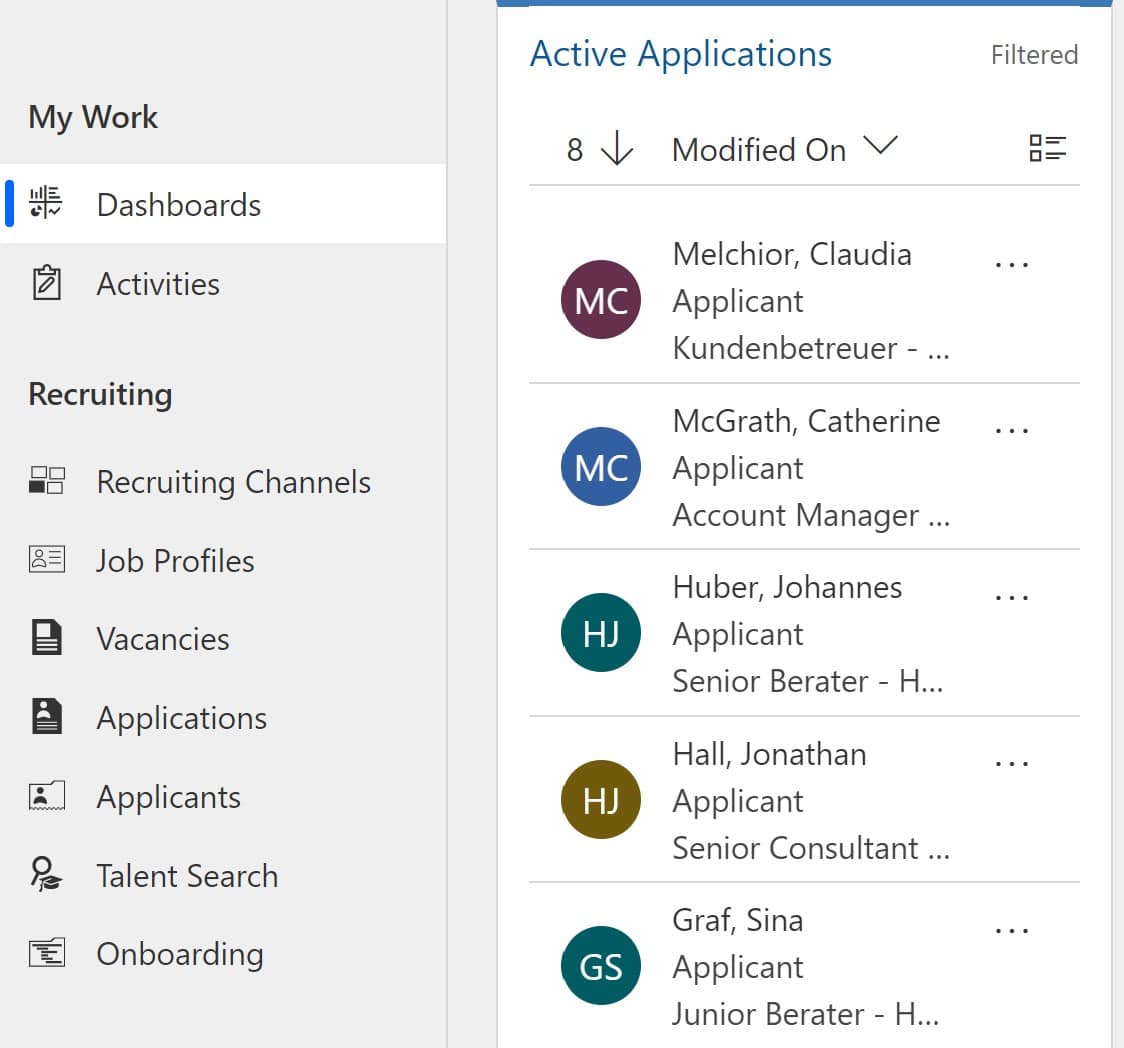
Hubdrive Recruiting extends the employee lifecycle with additional recruiting and candidate-management capabilities on Microsoft technology.
Actual Hubdrive Recruiting interface showing applicant, vacancy and recruitment management within the Hubdrive HR solution. Use this image to demonstrate how HRManagement365, powered by Hubdrive, can extend Microsoft Dynamics 365 Human Resources where additional recruiting workflows, candidate experience or lifecycle functionality are required.
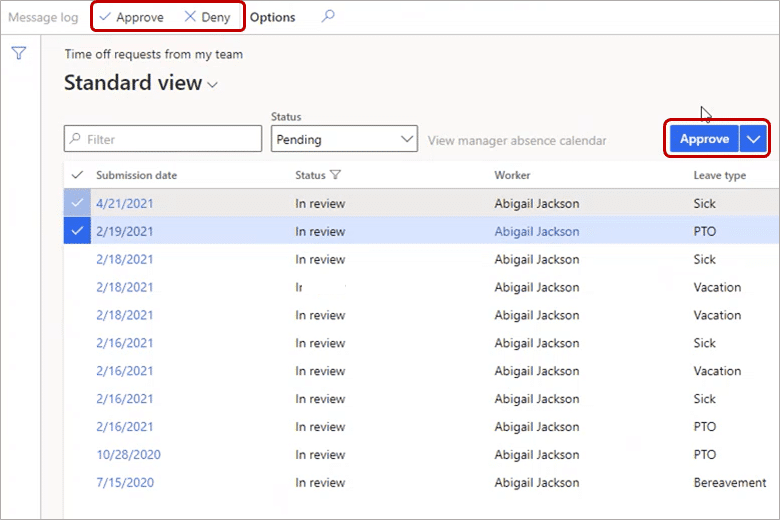
Microsoft Dynamics 365 Human Resources already provides native HR workflows such as leave requests, approvals and manager self-service.
Actual Microsoft Dynamics 365 Human Resources interface showing leave and absence management. This demonstrates that F&O is not simply a downstream operational system: Dynamics 365 Human Resources already provides substantial native HR capability that can be retained where it meets the organisation’s requirements.
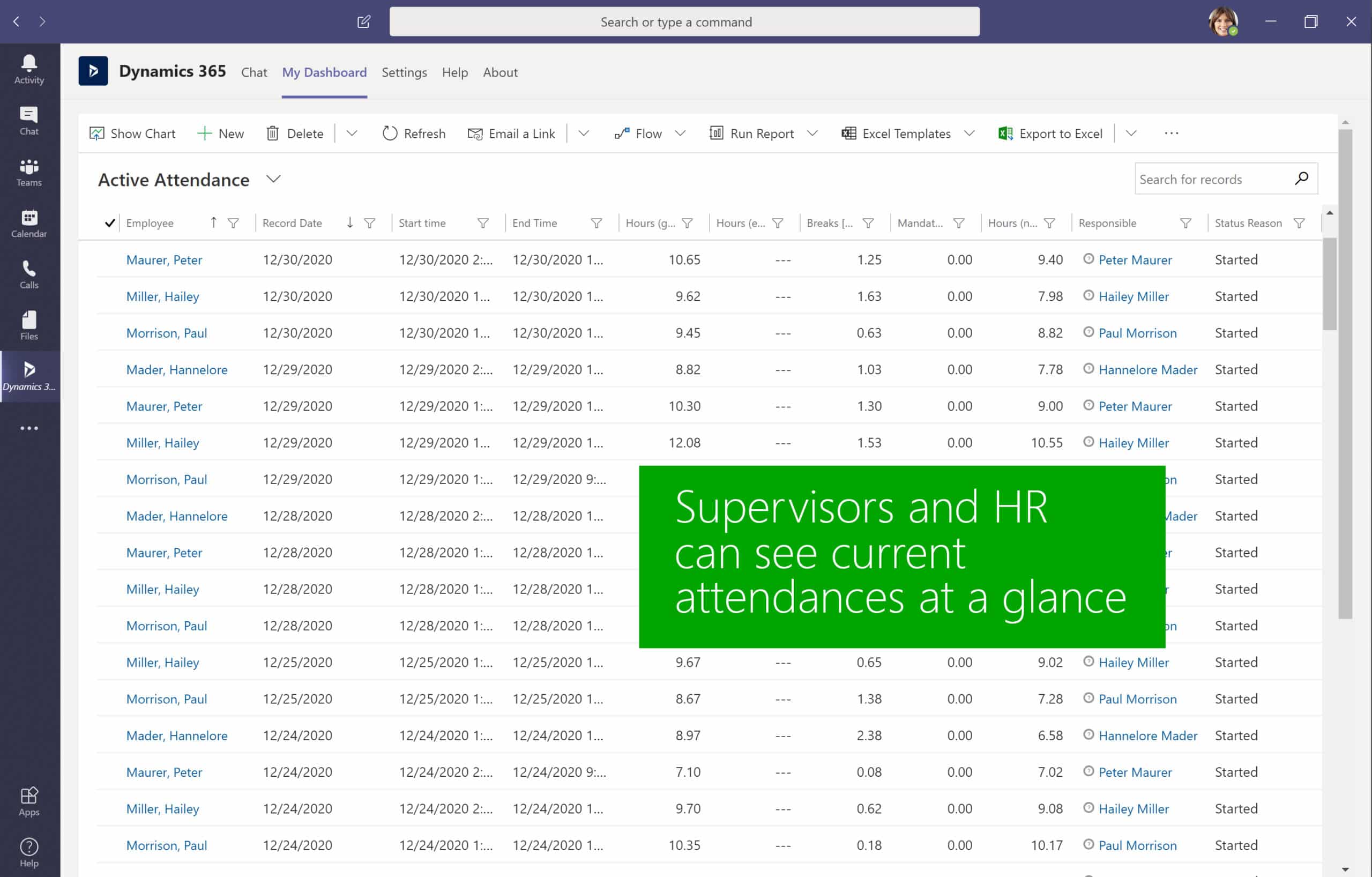
Hubdrive Time & Attendance adds specialist workforce-management capability where additional flexibility or employee-lifecycle integration is required.
Actual Hubdrive Time & Attendance interface showing attendance and working-time information. This illustrates how Hubdrive HR Power Extensions can complement Microsoft Dynamics 365 Human Resources with additional time-management processes suited to specific workforce and operating-model requirements.
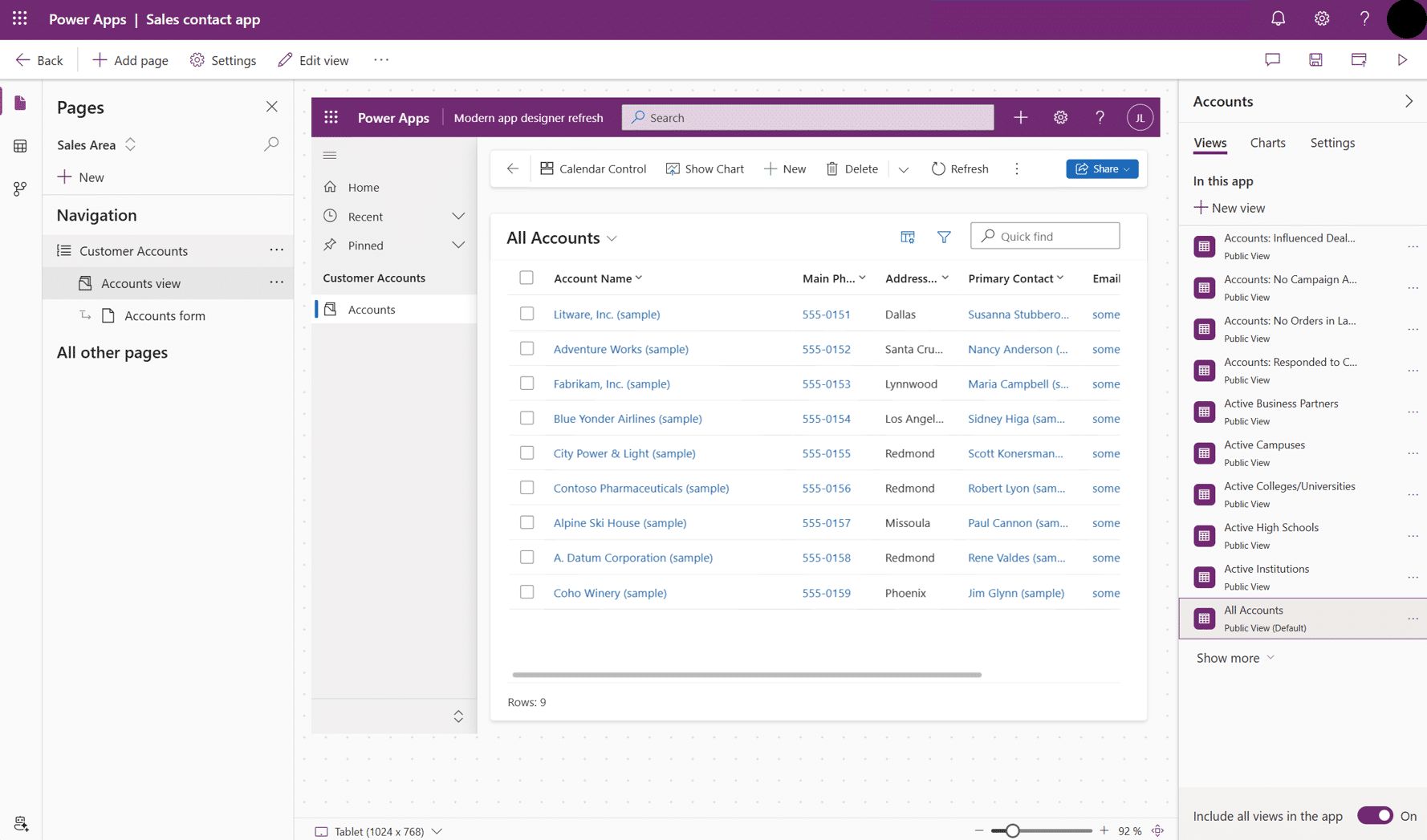
Hubdrive HR Power Extensions are built on Microsoft Power Platform, extending HR processes within the wider Microsoft ecosystem.
Actual Low-Code Microsoft Power Apps model-driven application experience. Power Apps and Dataverse provide the common Microsoft platform used to extend applications, workflows and automation alongside Dynamics 365 Human Resources and Finance & Operations.
Use the existing capability where it fits. Extend it where there is a defined HR gap.
The purpose of HRManagement365 is not to recreate functionality your organisation already uses successfully. The question is whether the existing environment supports the complete HR process, role experience, governance and ownership model you require.
Decision principle
Do not add HRManagement365 simply because a feature appears on a checklist. Add it where it creates a clearer product boundary, a better-supported HR process or a more deliberate connection than the available alternative.
01
Use the current Dynamics 365 Human Resources / F&O capability
Choose this route where Microsoft’s existing capability already supports the requirement appropriately and adding another process would introduce unnecessary overlap.
02
Add a Hubdrive HR Power Extension
Choose this route where Hubdrive provides additional employee-lifecycle functionality, workflow, automation or a more appropriate packaged experience.
03
Design controlled coexistence
Choose this route where Microsoft Dynamics 365 Human Resources and a Hubdrive extension both participate in the process. Define ownership, authoritative records, synchronisation, timing and exception handling before implementation.
Make dependencies and responsibilities visible before selecting scope
Licensing, data ownership, integration and support should be documented against the approved solution rather than inferred from a generic architecture diagram.
Will this create duplicate employee records?
Assign one authoritative owner, matching key, correction point and conflict process for every shared employee data object.
What licences will be required?
Document the HRManagement365, F&O, Power Platform, integration, reporting and document licences or capacities required by the approved design.
How will existing Microsoft HR capabilities coexist?
Map current HR and worker capabilities, local applications, payroll, time, reporting and roadmap plans before defining coexistence.
Who owns the integration?
Assign ownership for configuration, interfaces, data mapping, security, monitoring, failures, upgrades and ongoing support.
Will it work across entities or countries?
Validate entity structure, security, languages, policy differences, regulations, integrations and reporting against the required operating countries.
Will custom development be required?
Test each requirement against standard product capability, configuration, packaged extensions and integration before approving custom development.
HRManagement365 and Finance & Operations questions
Use these answers as a starting point, then validate the details against your applications, licences, product scope and required workflows.
What is HRManagement365 for Dynamics 365 Finance & Operations?
HRManagement365 provides Hubdrive HR Power Extensions and specialist implementation services for organisations using Microsoft Dynamics 365 Human Resources in Finance & Operations. Hubdrive extends Microsoft’s HR capabilities with additional employee-lifecycle functionality based on Microsoft Power Platform.
Does HRManagement365 replace Microsoft Dynamics 365 Human Resources?
Not necessarily. Where Microsoft Dynamics 365 Human Resources already meets the requirement, that capability can remain in place. HRManagement365 adds Hubdrive HR Power Extensions where additional functionality, workflow, automation or employee experience is required.
Does Microsoft Dynamics 365 Finance & Operations already include HR functionality?
Yes. Dynamics 365 Human Resources provides substantial native HR capability, including personnel management, recruiting, employee and manager self-service, onboarding and offboarding task management, leave and absence, benefits and time and attendance. Hubdrive’s F&O proposition extends these Microsoft HR capabilities rather than assuming they do not exist.
Will we have two employee records?
The products may each require employee-related information, but every data object and field should have an agreed owner, matching approach and correction point.
What information can move between the products?
Potential scenarios may involve selected employee, organisational, worker, resource, project, time or status information. Exact fields, direction, timing and supported behaviour must be confirmed.
Is the connection real-time?
The timing depends on the approved integration design. Each workflow should state whether the connection is immediate, scheduled, event-driven, manually initiated or handled through another pattern.
How should we evaluate HRManagement365?
Choose one employee process and inspect the trigger, roles, process owner, authoritative record, approvals, synchronisation requirements, exception route and support model.
Get more from the Microsoft HR investment you already have
Bring us one employee process that currently creates friction. We will identify what Microsoft Dynamics 365 Human Resources already provides, what should remain unchanged, where Hubdrive can add value, and what needs to connect.
A focused discussion based on your current architecture and priority workflow—not a generic tour of unrelated features.
What F&O already provides
Confirm the existing capability and what should remain unchanged.
What HRManagement365 could add
Identify the relevant product workflow and user experience.
What may need to connect
Define the information, ownership, timing and exception route.
What must be evidenced
Review modules, licences, architecture, implementation and support.